Study Abroad in 2026 After Matric (10th Grade) or Intermediate (12th Grade): Complete Guide for Pakistani Students
February 25, 2026
If you’ve finished either Matric (10th grade), Intermediate, or 12th grade (FA, FSc, ICS, ICom), and are now considering your career options moving forward, there may well be an instance where you’ve researched "study abroad after 12th grade or matric in Pakistan."
Every year, a large number of Pakistani students and their parents explore studying abroad to pursue more successful careers, gain greater international experience, and access higher-quality education. One of the main questions that keeps coming up, however, is whether students can go abroad after completing matric and whether they are required to take the IELTS exam.
To help answer the most important questions about studying abroad after either Matric or 12th grade in Pakistan, as well as many other related concerns, this updated guide addresses these issues in a straightforward, logical manner. One of the most important things you will discover in this guide is how to differentiate between the opportunities available to someone who has completed either Matric or HSSC; they are not the same.
The study process can be somewhat complex. One mistake in the immigration process of obtaining a bank statement or applying for a visa could delay your ability to study abroad for a minimum of twelve months. This is why planning to study abroad after finishing high school or multi-level (matric) can be difficult.
With Glommi.co providing you with information about studying abroad, there are several options available to guide you through the entire application process.
The "Matric" vs "12th Grade": Clarifying the True Distinction

In accordance with Pakistan's educational system:
- Matriculation: 10 years of education
- Intermediate (FA, FSc, ICS, ICom): 12 years of education
There are officially two different names for the conclusion of your 12th-grade education; they are:
- Higher Secondary School Certificate (HSSC)
Most Pakistani students who graduate high school (12th grade) do so at the age of 17. While many universities prefer that applicants enroll at age 18, this time varies across countries.
If you are 17 years old, you can enter a Foundation Program and start in a country with more flexible age restrictions, or you can wait a few months and start at age 18. An early plan can also help you avoid complications with visa applications.
Can You Do a Bachelor's Degree Abroad after Matric?
For an international university to offer someone a qualification for an undergraduate program, that person must have completed 12 years of education. Therefore, your pathway to apply for admission to an international university is strictly dependent upon your last completed qualification.
- Foundation Year Programs: One year of prep that leads directly into a bachelor's. Think of it as a bridge. UK universities offer these. So do Turkey, Malaysia, Cyprus, and Australia.
- A-Levels: Two more years of school, but this time Cambridge style. If your family can afford it, this opens doors globally.
- High School Completion Abroad: Some countries (Canada, USA, Australia) let you finish Grade 11 and 12 there, then apply to university as a local student.
- IB Diploma: The fancy international option. Two years, globally recognized, but intense.
Before selecting your chosen country, Glommi.co will provide a free consultation to students and complete an eligibility assessment for the country you wish to study.
Foundation & Pathway Programs Explained
Students who have completed Matric or have low grades after completing their 12th year often choose to pursue preparatory programs (called Foundation or Pathway programs) after finishing their secondary education in Pakistan, enabling them to obtain a bachelor's degree in a structured, recognized manner.
| Program | Duration | Leads To |
|---|---|---|
| Foundation Year Program | 1 Year | Direct Bachelor Entry |
| Pathway Program | 1-2 Years | Undergraduate Degree |
| Pre-Bachelor Program | 1 Year | University Entry |
| High School Completion Abroad | 2 Years | Local Diploma |
| IB Diploma Programme | 2 Years | Global University Admission |
These programs lead to bachelor's degrees abroad in a structured, recognized way.
Step 1: Documentation Requirement (IBCC and HEC explained)
Before you begin applying to any institution for admission, it is important that you properly complete all of your documentation. Many students delay their application process because they do not understand the importance of completing the necessary documentation accurately.
IBCC (International Bank Check Certification)
Most international universities will not simply accept any certificate issued by the boards in Punjab, the Federal Board, the Sindh Board, or numerous other provincial boards without going through the IBCC verification process. The IBCC is an equivalency certificate that allows the Pakistani Government and Universities to assess the current education level in Pakistan against the requirements of the country of residence.
If you are considering an international education, you should begin the IBCC equivalency process as soon as possible after completing your 12th or matriculation education in Pakistan.
Obtaining the IBCC equivalency requires submitting original certificates, identification documents and the required fees. The typical time to receive the determination of equivalency is 7 to 15 working days. If you are a Cambridge student, you will usually not have to obtain an IBCC equivalency for your O and/or A-level qualifications.
Through Glommi.co, you can participate in country-comparison sessions so your family can make a realistic decision, not one based on emotions alone.
HEC Attestation
The Higher Education Commission of Pakistan (HEC) is responsible for verifying educational documents for international use. The IBCC converts the results of Pakistani boards to equivalent results on an international scale.
The HEC verifies that the educational document is legitimate.
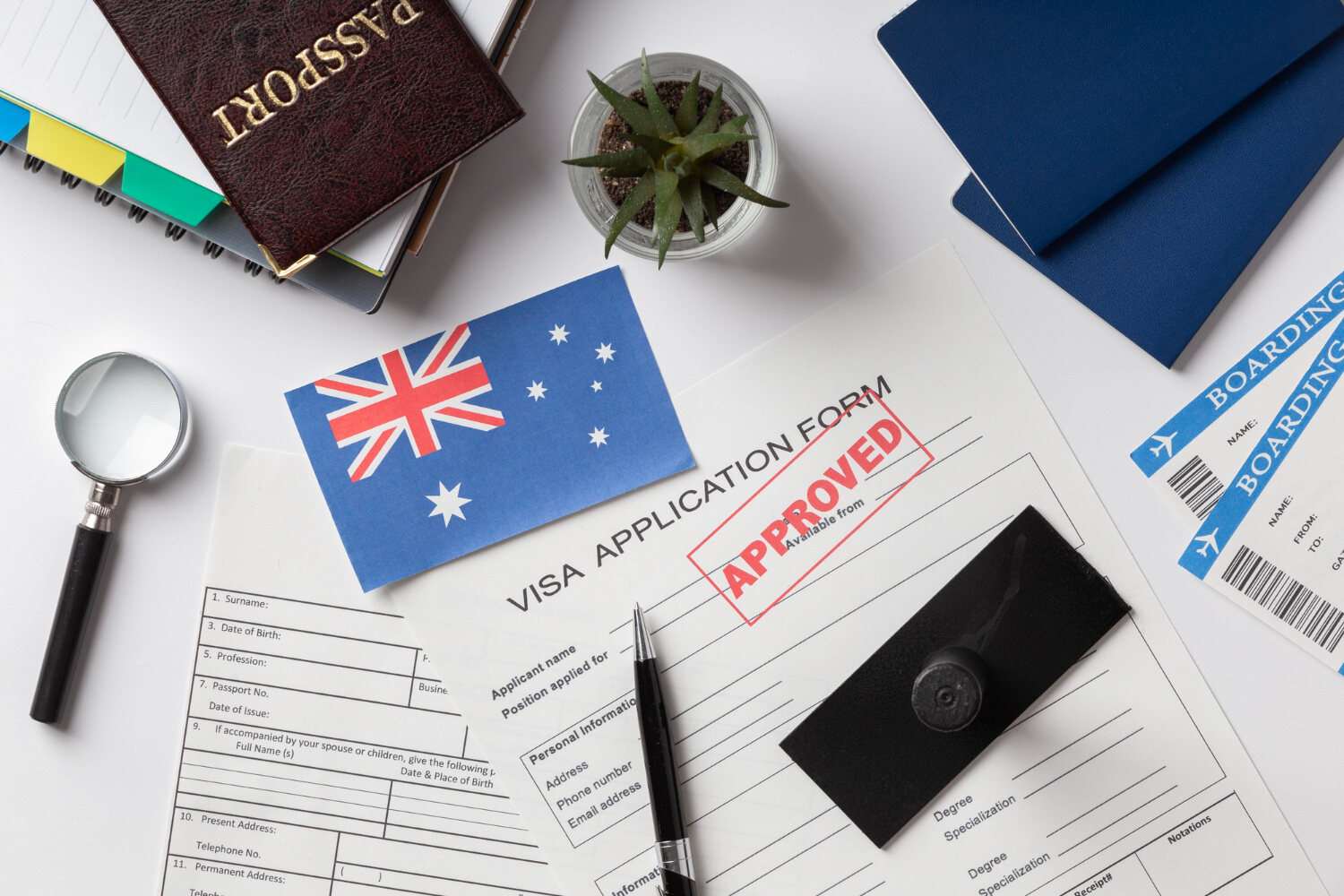
In many cases, embassies and universities located in Europe require a document to be attested by the HEC as part of the visa application that you are making for studying abroad. If you are going to attend an international educational institution in 2026, we recommend that you complete both the IBCC and HEC processes together as soon as you receive approval from your future university/college.
Documentation Required
Below is a summary of the documents that are generally required to apply for admission to an institution outside of Pakistan after completing either 12th grade or matriculation:
| Document Required | Details |
|---|---|
| Academic Transcripts | Proof of academic performance (Matriculation/FA/FSc/ICS/ICom) |
| IBCC equivalency | Verification of local Pakistani board results to equivalent results on an international scale |
| HEC attestation | Verification of educational document(s) to confirm legitimacy for international purposes |
| School Leaving Certificate | Confirmation that the student has completed 12th grade |
| Statement of purpose | Explanation of your future educational goals and motivation |
| Letter of recommendation | Reference provided by a secondary teacher/principal |
| CV/Resume | Summary of your time spent in school, as well as any extracurricular activities |
| Valid Passport | Required for student admission and visa offer |
| Offer Letter | Needed for visa application |
| Bank Statement | Proof of financial support |
Step 2: Selecting Your Country and Pathway to Study Abroad
When it comes to choosing a country to study in, there are several factors that you will need to consider including the following: your eligibility to study in that country; The Cost of living in that country; The percentage of applicants who are granted a visa to study in that country; and If the qualification of your programme will have a positive affect your chances of getting a job after you have graduated from your studies.
The following chart outlines some options available to Pakistani citizens who wish to study abroad after completing 12th grade (matriculation).
| Country | Entry After Inter (12th) | Entry After Matric (10th) | Advantage |
|---|---|---|---|
| UK | Direct entry | Foundation year required | Minimum of 3 years to complete a Bachelor's Degree |
| Germany | Preparation route required | Not determined | Tuition-free public universities |
| Canada | Direct/Foundation | Foundation year | Work rights/PR |
| Australia | Direct/Foundation | Foundation year | Education quality |
| Turkey | Direct entry | Foundation year | Affordable/Visa-friendly |
| Malaysia | Foundation | Diploma | Budget friendly |
| Hungary | Direct/Foundation | Foundation year | Fully funded scholarships |
Germany
Most students applying for Germany are required to complete the Studienkolleg (Foundations program) before they can attend any public university in Germany.
Germany is a popular choice for many students from Pakistan, as it is one of the few countries with no tuition fees; however, students must cover the cost of living through a blocked account.
Step 3: Meet English Language Requirements
Most universities in Canada require all students to provide proof of proficiency in the English language and test scores by means of standard tests.
| Test | Typical Score | Typical Destination |
|---|---|---|
| IELTS | 5.5 - 6.5 | UK, Australia, Canada |
| TOEFL iBT | 60 - 90 | USA, Canada |
| Duolingo English Test | 95 - 110 | Global(growing) |
| PTE Academic | 50 - 65 | UK, Australia |
As an alternative to IELTS, many universities will accept a Medium of Instruction (MOI) letter or a student taking one of the tests mentioned above.
Step 4: Apply for Scholarships for Pakistani Students to Study Abroad
If you’re looking for scholarships for Pakistani students after 12th in 2026, government-funded options offer the best chance at full coverage. Here are 4 scholarships available after completing 12th grade:
Here is a list of 4 scholarships for Pakistani students available after completing 12th grade:
| Scholarship Name | Country | Scholarship Description |
|---|---|---|
| Türkiye Burslari | Turkey | Includes full tuition, a stipend and accommodation |
| CSC Scholarship | China | Includes full tuition with a monthly allowance |
| Stipendium Hungaricum | Hungary | Includes full tuition with a stipend |
| UWC | Many countries | Includes the full cost of the International Baccalaureate and room and board |
Fully funded scholarships are generally very competitive; however, students studying in other countries should be able to find scholarships with partial funding or only available through the universities they apply to.
Step 5: Ensuring Financial Requirement
Different countries also have different requirements regarding the type of financial proof required from students when applying for study abroad programs:
| Country | Approximate amount to be in bank accounts |
|---|---|
| Germany | Approx. €11,000 (in blocked account) |
| Canada | Tuition + Approx. CAD 10,000 for living |
| UK | Tuition for 9 months of living |
| Turkey | Must meet a lower amount than students applying for the UK or Canada to meet requirements |
This will help answer questions about how much money you need in the bank before you can leave to study abroad after finishing year 12.
Can You Still Study Abroad if Your Academic Grades are Low (55-70%)?
Students are seeking ways to study abroad, and those with low grades (such as 60%) will find that countries like Malaysia, Turkey, Cyprus, and China have flexible entry criteria allowing individuals who do not meet minimum entry requirements to be accepted into their programs. A well-crafted statement of purpose significantly improves the chances of being accepted.
For competitive scholarships, a higher GPA can improve your competitiveness.
Approximate Cost Comparison (2026)
The table below shows an approximate cost comparison for the average student studying towards their undergraduate degree:
| Country | Tuition (Yearly) | Living Expenses (Monthly) | Scholarship Availability |
|---|---|---|---|
| Germany | €0 (no tuition for public universities) | €850 - €1,000 | Yes |
| Turkey | $3,000 - $6,000 | $400 - $600 | Yes |
| Malaysia | $2,000 - $5,000 | $400 - $500 | Partial scholarships available |
| UK | GBP £10,000 - £18,000 | £900 - £1,200 | Limited availability |
| Canada | CAD 15,000 - 25,000 | CAD 1,000-1,500 | Based on merit |
Timeline for Application to Study Abroad 2026 Pakistan
| Timeline Before Intake | Required Action |
|---|---|
| 12 Months | Research countries and create a shortlist of programs |
| 9 - 10 Months | Prepare for IELTS and obtain HEC equivalency |
| 7 - 8 Months | Submit university applications |
| 5 - 6 Months | Receive offers and apply for scholarships |
| 3 - 4 Months | Submit a visa application |
| 1 - 2 Months | Book a flight and arrange accommodation |
Creating an early plan significantly increases the chances that your admission and visa applications will be accepted.
Conclusion
Planning to study abroad after high school in Pakistan requires much more than simply selecting a country to study in. You must fully understand the eligibility requirements, documentation, visa and financial requirements, and the scholarship competition. Errors in IBCC equivalency documentation, HEC attestation, proof of affidavit, and pathway selection could cause you to wait up to a year for equivalency.
At Glommi.co, students and parents receive a structured approach with document preparation, assistance with selecting countries to apply to study, scholarships, and visa processing.
If you want clarity for 2026 admissions, book a consultation with Glommi.co and build a realistic, personalized study abroad plan based on your grades, budget, and goals.
Frequently Asked Questions (FAQs)
Q. Can I study abroad after matric without IELTS?
A. Yes, but your options are limited. Some Turkish and Malaysian universities accept a Medium of Instruction (MOI) letter. However, most competitive universities and scholarship programs (like Türkiye Burslari) still require IELTS. See our UK list of accepted universities and the Canada MOI options guide for more.
Q. Which countries accept Pakistani matric certificates directly?
A. No country accepts Matric certificates "directly" for bachelor's entry. Matric is only 10 years of education; universities require 12-13 years. Malaysia, Turkey, the UK, Canada, and Australia all have foundation pathways specifically for Matric students.
Q. Can I go abroad at age 17 after 12th?
A. The UK allows 17-year-olds to enrol with parental consent. Turkey and Malaysia also accept 17-year-olds. Canada and Germany typically require 18. If you're 17, focus on the UK, Turkey, or Malaysia.
Q. Do I need an IBCC equivalency certificate to study abroad?
A. Yes, absolutely. Apply online at ibcc.edu.pk as soon as your results are announced. It takes 7-15 working days for normal processing.
Q. Can I study abroad after 12th without a gap year?
A. Yes, if you plan properly. The key is starting 12–14 months before your intended intake. The students who end up with gap years are usually the ones who started too late or missed document deadlines (especially IBCC).
Q. What can I study abroad after FA (Arts)?
A. FA students can apply for Social Sciences (Psychology, Sociology, International Relations), Media Studies, Journalism, Design, Fine Arts, Law (UK), and Education. Turkey, Malaysia, and the UK are particularly open to FA applicants.
Q. What can I study abroad after ICS (Computer Science)?
A. ICS is a great foundation for international study. Computer Science, IT, Software Engineering, Data Science, Cyber Security, and AI programs all welcome ICS students with good grades. Germany, Canada, the UK, and Australia have strong CS programs.
Q. Can I get a scholarship with average grades (60-70%)?
A. Yes, but you need to be strategic. Competitive scholarships (Türkiye Burslari, Stipendium Hungaricum, CSC) are harder with average grades. However, many Malaysian, Turkish, and Chinese universities offer merit-based partial scholarships in the 60-70% range.
Q. What is the cheapest country to study abroad after 12th?
A. Malaysia is probably the overall winner; tuition: $2,000–5,000/year; living costs: $450–670/month; total first year: approx. Rs. 2–4.5 million. Germany has free tuition but requires the €11,904 blocked account. Turkey offers affordable tuition plus the possibility of Türkiye Bursları covering everything.
Q. Can I study abroad after matric and complete a bachelor's faster?
A. The UK foundation year (1 year) + bachelor's (3 years) = 4 years total to degree. In Malaysia, a diploma (2 years), then a bachelor's year 2 (another 2 years) = 4 years total. The real time-saver is going to the UK after 12th: a 3-year bachelor's means you finish 1 year earlier than in Pakistan.
Q. Do I need to take the SAT for undergraduate admission abroad?
A. For most countries, no. SAT is primarily required for US universities and some competitive programs in Canada and Turkey. The UK, Germany, Malaysia, Australia, and most European countries don't require the SAT at all.
Q. Are there scholarships for Pakistani students after matric?
A. Matric-only students are not eligible for most university scholarships directly, as these require 12 years of education. However, once you complete a foundation year abroad (after matric), you become eligible for merit-based scholarships offered by universities in Turkey, Malaysia, China, and Hungary. Students who complete their 12th grade in Pakistan have direct access to fully funded programs like Türkiye Burslari, CSC China, and Stipendium Hungaricum.
Q. Can I get a study visa after matric?
A. Yes, but not for a bachelor’s degree directly. After matric, you first need an offer letter from a foundation year or pathway program abroad. Once you have that, you apply for a student visa for that specific country. The visa process then follows the standard route — bank statement, IBCC equivalency, HEC attestation, and your offer letter. Countries like Turkey and Malaysia have simpler visa processes for matric students compared to the UK or Canada.
Q. Can I study in the UK after matric from Pakistan?
A. Yes, but not directly into a bachelor’s degree. After matric, you must first complete a foundation year program at a UK university or college. This takes one year, after which you enter Year 1 of a bachelor’s degree — so the total duration is 4 years (1 foundation + 3 bachelor’s). At 17, you can still apply with parental consent. IELTS 5.5–6.0 is typically required for UK foundation programs.

Ali Kazmi


Other Blogs

March 10, 2026
Best Courses to Study
When selecting the ideal programs for studying abroad, students have to consider many factors and realize that it is one of their most important choices before traveling...
February 25, 2026
Study Abroad in 2026
Complete guide for Pakistani students planning to study abroad after Matric or 12th grade in 2026...

February 20, 2026
How to Study Nursing
Study nursing in Canada with this comprehensive guide for international students covering fees, IELTS, NCLEX, PGWP, and PR pathways.